|
Charis Around
the World
Tidbits
from Ebony
Elizabeth Carmichael
The Anatomy
and Physiology of a Community Development Project
How do
you do what you do? This is a question I get a lot. Sometimes,
people don’t even get to this question because it seems so
unthinkable to live in a place like Ebony, let alone accomplish any
productive work there. But, productive work is going on all over the
country. And, when done well, the development efforts end in a
sustainable harvest of strengthened communities and individuals.
This
month, I wanted to give you a little glimpse into “what I do.” The
first, and most important point, is that I do nothing alone. I not
only rely on Christ’s strength just to get out of bed in the morning
(as well as everything else I do!), but I also do not work alone in
any aspect of life in Ebony. I am a team member. My team is not a
group of individuals with different tasks, simply identifying
themselves as a team because they work for the same company or have
the same background, expertise or experience. We are a team because
we are interdependent on each other, mutually submissive, working
together for a common goal that depends upon 100 percent participation
from ALL team members.
We are a community development team. The purpose of community based
development work is to facilitate a given community so that they can
meet their own needs in a sustainable way. We are in Ebony to meet
and honor our host communities, to learn from them, to help them
help themselves, and to offer what we have for their good. This
includes offering all that we have and know that is for their
eternal good. Here in this article, however, I am sticking to the
physical development work that we do so that you can begin to
envision what my “work life” is like. It’s so meaningful for me to
share this with you this month since I am returning to Ebony in
mid-March. I invite you to pray for my travel back in-country,
for my language acquisition and for my team as we seek to
re-establish ourselves in the development efforts in our beloved
country of service. I also invite you to pray for the host
communities that our Father will lead us to. Pray that He would
prepare the way and give us favor and an ability to offer help and
love to people hungry for Him.
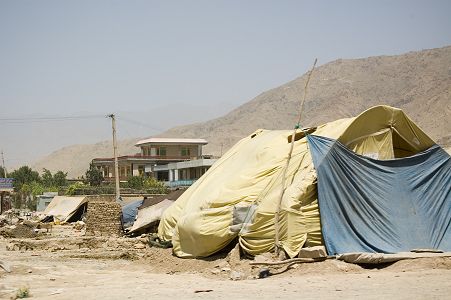
There are many communities in Ebony living in tents. Some live in
this condition because of situations that have kept them in poverty.
Others are in this condition because they are displaced due to
drought, war, or other problems motivating them to flee their home
towns. Tent communities in Ebony are in desperate need of community
development.
The
perspective that I hold is that this kind of charitable work is a
responsible use of our stewardship of monetary resources as well as
our talents and our time. It is the kind of life Christ has called
us to on this earth. Instead of just throwing money “down” to those
less fortunate than us, we are coming alongside them, taking the
time to sit, listen and learn and offering what we have available to
us for their empowerment….for their good.
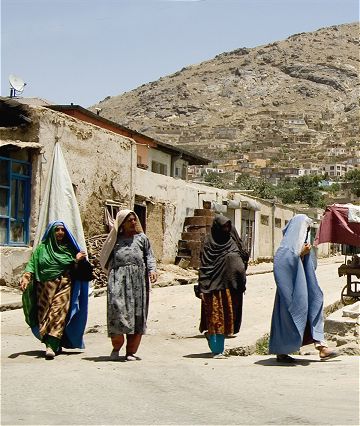
Hypothetically speaking, what if this were a shot of four trained
community development workers heading off to their host communities
in order to teach a lesson about the benefits of breast feeding and
how to make sure a woman is producing a good amount of milk for her
baby? Wouldn’t that be wonderful! This is a picture of my dream. A
development program that does not revolve around or depend entirely
upon myself or my team, but that becomes “owned” and carries forth
from the local people themselves. Many they also carry forth much
more important news (yes, even more important than breast feeding!)
to those around them!
Although every community development project is unique with its own
set of rewards and challenges, there are some common elements
inherent in a good development process. Some given qualities of a
well done, community based project are:
--IT WILL TAKE TIME
--IT WILL TAKE PATIENCE
--IT WILL TAKE TRUST
--IT WILL TAKE CROSS CULTURAL EFFORT
--EVERYONE WILL LEARN SOMETHING
--THE OUTCOME BELONGS TO THE LORD
As much as I want to dive into detail on each of these
characteristics, I will spare us all for now. Books could be
written, and in fact many have, on each of these topics. Perhaps, as
my team heads back and we begin our work again, I can update you on
how each of these components is going with regards to our project
work.
A well done community based development project can be done using
any number of methodologies, but I will share with you the general
steps we intend to take as we prepare to approach a host community
within the coming year.
-
Our
first step is to come in contact with a host community. Sometimes
this is accomplished through an awareness project where we offer
short term relief work as a means of spreading the word that “we are
here and we want to serve you.” Sometimes, this step can be bypassed
for a more simplified approach in which community leadership is
contacted directly and an open dialog begins. Please pray for our
organization as we seek establishment in a new city, Glory Land, and
as we pray for the Father to reveal the communities within the city
that are ready for a development project.
-
After
establishing our presence and earning some report with a host
community, a project team then conducts a needs analysis discussion
including components of problem solving and brainstorming. In Ebony,
this kind of dialog MUST happen among community leadership in order
to take root and flourish within the community. But, the discussion
will also, hopefully, include input from community “lay people”—the
actual people in dire need of help, the people who will do the
actual work of the project, the people who will be most affected or
make significant investment in the project. Individuals at all these
levels of interaction with the development project are called the
project’s “stakeholders.” Within this kind of discussion, our
team/organization will ask the community, “What are your needs? What
can be developed within your community to make you stronger, more
stable, and healthier?” As they discover and identify their own
needs, we offer our help and facilitation in helping them meet their
own needs. For example, if a community says, “Our women and babies
keep dying during or after childbirth.” Our response would be to
share that we are equipped to train people in the community to be
trainers themselves, teaching the entire community (over time) about
issues related to pregnancy and childbirth. We would allow the
stakeholders to decide if this resolution is appealing to them.
Then, the project begins.
-
When the
stakeholders have offered input and engaged in meaningful discussion
of community needs and resources available that will enable the
community to meet their own needs, the next step is to get the word
out to the entire community. This is an especially important step if
the development project involves education efforts (such as
childbirth education). The support of the community as a whole is
crucial to accomplishing lasting change for the entire community.
-
Our next
step involves actually equipping the community to meet their
needs—training trainers, education groups, action groups.
Participatory learning is crucial to this part of the process. We
don’t follow a traditional classroom model in sharing information
with our host communities. Instead, we have been trained in
participatory learning methods which allow group trainers to
“facilitate a process that helps people analyze problems, discover
solutions, and define positive action steps. Participatory learning
helps people discover they are capable of much more than they
thought. It gives dignity by mobilizing the greatest resource of all
for overcoming poverty—the God given resourcefulness of people who
live in difficult circumstances.” (Source: Lifewind International)
Are these concepts ringing a bell for any childbirth educators out
there?!
-
Along
the way and at a clear “ending point” to the project, the community
and any additional stakeholders need to evaluate the effectiveness
and sustainability of the project. Failure to evaluate in this
matter can lead to disastrous results in a cross cultural
environment. Part of truly empowering a community mean also trusting
them to evaluate their work, to reflect, and to make choices about
the next steps they need to take in order to move forward into
further development. Sometimes, communities who have been truly
empowered and developed through the whole process, gain a vision for
being facilitators (community development workers) for other
communities in need!!! It is always so exciting to me when I meet
men and women who have become community development workers because
of the development work they have been a part of in their own
communities first.
Next month, I plan to summarize a hypothetical project for you in
story form, applying the steps I mentioned above.
To learn even more about community development principles and
projects around the world, or to seek training for yourself, I
highly recommend
Lifewind
International.
Love and Blessings,
Elizabeth Carmichael
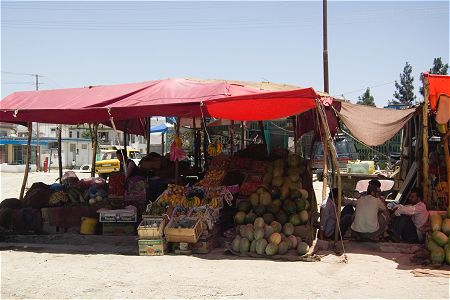
A local fruit stand. Agricultural development and animal husbandry
are some of the most promising types of community development
projects offering hopeful change throughout the country of Ebony.
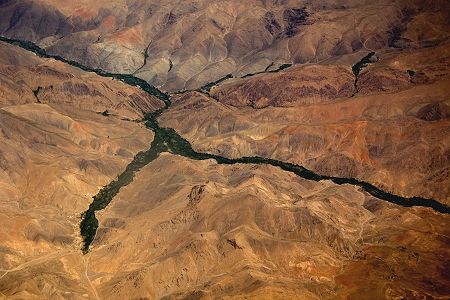
A
view from the sky. This picture and the next show the types of
narrow, green valleys that exist throughout the mountainous regions
of Ebony. Each green strip represents villages of impoverished
people who are far from access to education, health care, and
economic development. Guess what else they are far from/have little
access to? Truth. Hope.
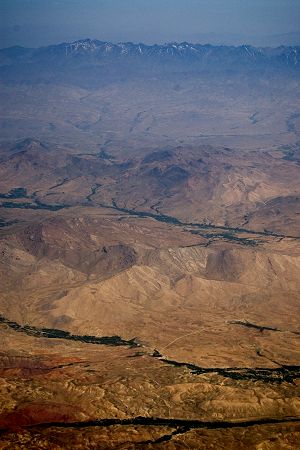
Who will dare to go where they are so that lives may change and
eternal destinies might be impacted for His glory?! |