|


Kristi Zittle
My name
is Kristi Zittle and I am a direct entry midwife and stay-at-home mommy to our eleven children, Kati, Josh, Sarah, Brady, Abby,
Gracie, Emma, Isabella, Jacob and Joel (who joined our Savior in Heaven hours after their births in July 05), and Trevor.

I have over 7 years of study, training and practice in midwifery and have spent
much of that time researching and becoming familiar with herbs and
other supplements that benefit our bodies in a variety of life
stages. I served under two different midwifery practices in the state of Pennsylvania and received
extensive midwifery training in
those roles. In one of these apprenticeships, I worked closely with a certified nurse midwife which led me to believe in continuing my
education and training on a constant and never-ending basis.
In addition to my study of midwifery with a Midwifery Academics
Course, I have taken many courses in pursuit of an RN
degree at a local University and plan to continue educating myself
to appease my insatiable desire to learn about the human body and all things physical especially as this study relates to the female
body. My goal is to continue midwifery education in many ways for as
long as I am able to learn. I am currently pursuing certification through the North American Registry for Midwives and hope to be fully certified within the next year. I feel very confident that my
initial education as a direct entry midwife, my thorough
apprenticeships, my years of experience practicing in Pennsylvania
and two other states (over 200 catches--Praise the Lord), as well as
my current education in nursing and midwifery, will allow me to continue to practice with the knowledge and skills that will provide
confidence and comfort for any couple seeking a safe and happy home
birth.
I am currently helping women all over the nation find peace through their birth choices by educating families about nutrition, prenatal
care, delivery, postpartum, and regular gynecological care. While continuing to pursue my education in midwifery, I will also continue my
studies in herbology to increase my knowledge in the uses and benefits that we can gain by supplementing our daily diets with
them. I desire to mix my knowledge of natural herbs and nutrition
with my strong background and expertise in women's health, especially in areas that focus upon fertility, pregnancy, labor,
delivery, and the postpartum period to provide exceptionally well-rounded care to every person I am blessed to serve. It is my desire to continue producing new products for the nutritional well
being of all I am blessed to serve.
I have also been working on a new concept that is near and dear to
my heart. I know of the benefits of educating and offering
childbirth education classes and nutrition classes, but I feel this
is still not enough. So, with this in mind, I have found a way to
further incorporate the joy and excitement in the pregnancy and birthing
process by holding "Celebrations" for women who are expecting or
have just had their babies. These "celebrations" or birth day parties are unlike the typical baby showers we are fond of in that the focus is not upon the gifts one will receive, but to keep our
eyes focused upon the gift God has granted to each person in the form of life. At the latest "Birth Day Celebration" I welcomed over
twenty families pregnant and with new babies to celebrate the lives to which God has blessed them.


A foot
washing ceremony was held and baby footprints were placed upon a wall in my home to recognize the preciousness of life and to remind
everyone that every life is precious (whether the first life given
to a family, or the 20th). It is my goal to have several of these
"celebrations" a year to return our focus to the Creator and not to the busyness of life that often consumes us.

Comments From Our Readers
Dear
Anna Lane,
In response to your "Ask the Professional,
Reflections Of A Midwife" article in
our
February
2007 newsletter
I want to thank you for sharing your story of becoming and being a
midwife!!! Your journey is so inspiring to read and share in because
you shared not only your joys and trials as a midwife but also
as a wife and mother. You gave wonderful insight into how
relationships past affect relationships future, but mostly you
demonstrated in your own life the beauty of God's Grace. I love how instead of becoming bitter or depressed because of your sickness you
drew close to the Lord and His wisdom. I was especially touched because I have recently been 'diagnosed' with an allergy to ALL animal products! It has been a difficult change for me but God is
faithful. So I just wanted to thank you from the bottom of my heart for caring enough to share such a beautiful and heartfelt journey.
~Elizabeth
Lugmayer~Doula,CBE
Dear Friends,
I want to express my appreciation for all the personal life stories shared with us here.
I am touched by your heartfelt birth stories,
lives of our midwives, adoption stories, and more. You have
graced these
pages and touched each of us in many individual ways. Even the
Kids Korner stories are priceless! Thanks everyone!
~Your Newsletter Editor, Susan Oshel
|

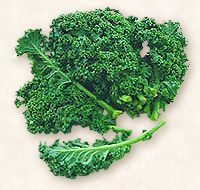
Kale
Kale is considered to be one of the
most highly nutritious vegetables, with powerful antioxidant
properties. It is a very good source of iron, calcium, vitamin C, Folic Acid, vitamin K and Carotenoids (which provide vitamin A). In
Japan, kale juice (known as aojiru) is a popular dietary supplement. Power food ~ Kale is an excellent source of vitamins C and A. 1/2
cup kale has 2.2 gm of protein, .90 mg of iron and 25 mcg folic
acid.
Kale freezes well and actually tastes sweeter and more flavorful
after being exposed to a frost.
Tender kale greens can provide an intense addition to salads, particularly when combined with other such strongly-flavored
ingredients as dry-roasted peanuts, tamari-roasted almonds, or red
pepper flakes.
In the Netherlands it is very frequently used in the winter dish
stamppot and seen as one of the country's traditional dishes, called Boerenkool.
A traditional Portuguese soup, caldo verde, combines pureed
potatoes, diced kale, olive oil and broth. Under the name of couve, kale is also popular in the former Portuguese colony of
Brazil, in caldo verde, or as a vegetable dish. When chopped and stir-fried, couve accompanies Brazil's national dish, feijoada.
Kale (also called Borecole) is a form of c abbage (Brassica oleracea
Acephala Group), green in color , in which the central leaves do not form a head. It is considered to be closer to wild cabbage than most
domesticated forms. The species Brassica oleracea contains a wide array of vegetables, including broccoli, cauliflower, and
Brussels sprouts. The Cultivar Group Acephala also includes spring
greens and collard greens, which are extremely similar
genetically.
Kale is available year - round, but it shines as a cold weather crop and is at its most flavorful and tender in the winter months.
Cut & clean
Thoroughly clean kale by dunking it in tepid water several times and then rinsing under cold running water.
Quick & easy recipe
Sauté kale in a little olive oil for 5 minutes over medium heat. Turn down the heat and add garlic, fresh lemon juice, and toasted
sesame oil; stir for another 5 minutes.
Preparation, uses, and tips
Wash kale well by dunking it in a bowl of tepid water several
times and then rinsing under cold running water. Small kale leaves
can be used whole. The larger leaves should be stripped or cut from
the center rib. The rib can be chopped into small pieces and cooked with the leaf or discarded. To shred the leaves, place them in a
pile, roll up, and then thinly slice them.
Baby kale can be used raw mixed with other greens in salads. Mature
kale must be cooked, as it is too tough to consume raw. It can be
steamed, boiled or simmered in vegetable broth.
Kale can also be added to soups and stews. It is especially good in
soups that contain potatoes, barley, or beans. Good ways to
flavor kale are to add any of the following: garlic, olive oil, fresh lemon juice, toasted sesame oil, cinnamon, caraway seeds,
currants, almonds or toasted pine nuts.
To boil
Traditional ways to prepare kale call for long cooking—about 40
minutes—until it is very soft. However, kale can also be boiled
quickly, about 5 to 8 minutes, until it is just
slightly crunchy.
To sauté
Boil the kale first for about 5 minutes to enhance its flavor. Then
sauté in oil with onions and
garlic for about five minutes.
Buying and storing tips
Look for dark bluish-green or dark leaves that are not wilted. Avoid
those that are yellowing. Store kale in a perforated plastic bag in the vegetable crisper and use it within a few days.
Varieties
Kale is available as mature or baby leaves. Although the most common
type has curly leaves that are deep green with a tinge of blue,
Russian kale has purple-red stems and a less curly leaf. Kale is also available frozen. Flowering kale consists of ruffled heads of green kale tinged with ornamental pink, purple, and white. The taste
and texture are not as good as leafy kale.
Have a good recipe? Share it here!

"I'm Something Else"
Shared by Suzanne's
Mom, Heather Jones

Two-year-old Suzanne is a little girl with a very BIG personality. I tend to say quite frequently,
"Suzanne, you are 'something else'." Now I realize how frequently I
say it. Last week, her daddy called her 'princess', and she
corrected him saying, "No I am NOT a princess. I'm something else."
|