|
Charis Around
the World
Tidbits
from Ebony
Elizabeth Carmichael
The Anatomy and
Physiology of a Community Development Project
PART II
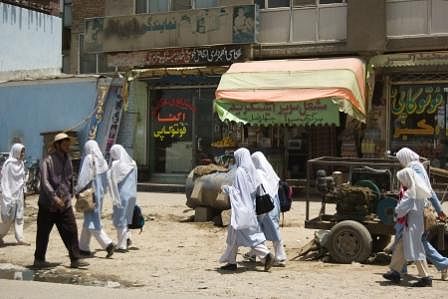
Girls or ladies usually signify that they are students by wearing
white head covers to their classes. In some parts of Ebony, the
education of females is not accepted. Communities may be put in fear
when attacks occur against female students. Sometimes schools or
training centers are targeted for bombings. Other times, even very
young girls are beaten on the street or have acid thrown on their
clothes and in their faces. Remember to pray for protection over any
females seeking to learn in the country of Ebony.
As promised last month, I am going to share with you a hypothetical
story about how a community development project might work in Ebony.
The narrative portions are completely fictional, but informed by
experience, observation and the input of experienced community
development workers, both ex-patriot and local.
Before we dive into the story, however, I wanted to thank all of you
for your petitions on my behalf as I headed back overseas again
after three months in the States. I am so grateful to be back here
in Ebony! The Father blessed me greatly in my travel. I am still in
the capital, sorting through my belongings and making them ready to
ship to my new city, "Glory Land." Please continue remembering me
and my co-workers as we begin a new work!
If you haven't read the article from last month's newsletter, you
might want to go back and review.
Link to it here As you will recall, I shared with you that
my work here in Ebony is that of a community development worker.
Last month, we discovered that "the purpose of community based
development work is to facilitate a given community so that they can
meet their own needs in a sustainable way. We are in Ebony to meet
and honor our host communities, to learn from them, to help them
help themselves, and to offer what we have for their good."
We also discussed some given qualities of a well done, community
based project:
--IT WILL TAKE TIME
--IT WILL TAKE PATIENCE
--IT WILL TAKE TRUST
--IT WILL TAKE CROSS CULTURAL EFFORT
--EVERYONE WILL LEARN SOMETHING
--THE OUTCOME BELONGS TO THE LORD
OK! I think we are officially ready to dive into a picture of what
this whole process might look like for a little, 'ole community
development worker like myself. Let's name our development worker
"Lizzie."
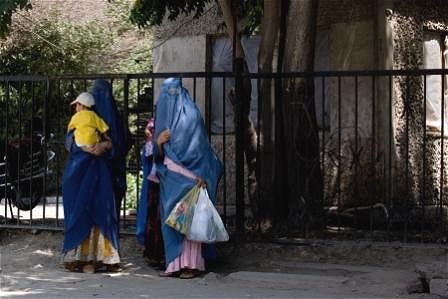
Foreigners as well as local community development workers must make
sure they are appropriately dressed and sensitive to community
values as they proceed with their work. In Ebony, women must cover
themselves and act appropriately quiet in public. These efforts are
necessary when a worker values being respected and accepted within
the community.
Lizzie has arrived to her new country. Her head is spinning from the
past two weeks filled with "last" visits with family and friends,
phone calls, and spending hours packing all she might need for three
years into two suitcases that weigh less than 50 pounds. Whew! She
spends her first week in country unpacking and looking for a new
language tutor. The first week assigned to this task turns into two
weeks. Finally, a young woman agrees to teach Lizzie 10-12 hours
each week. The other 20 hours of language study each week need to be
spent listening to and reviewing her lessons, practicing the
alphabet and memorizing vocabulary.
Lizzie wonders if she will be ever be able to have a conversation in
this new language. As she glances at her childbirth books, she
wonders how she will ever be able to communicate well enough to make
a difference in the lives of families within her host culture.
Lizzie's team leader asks her to write up a set of goals to guide
her personal development, team participation and project work over
the next few months. Pouring over the ideas and the impossibility of
it all, Lizzie dissolves into tears before ever finishing this task.
The next morning is a fresh start. She attends her language class,
finishes her assignment and starts all over again.
Several months later, Lizzie begins to set up meetings with other
community development workers in the area, with government officials
and with provincial leaders. Sometimes the meetings yield a little
bit of helpful information. Other meetings are filled with tea,
complaints about the current situation in the country, and
frustrating fumblings in Lizzie's new language. Lizzie feels like
she is getting nowhere fast. But, she is becoming known in the
community. And people are beginning to trust her enough to introduce
her to their wives and to other officials. Another month has come
and gone.
Lizzie
happily hires three development workers from the local culture. She
will be able to learn even more language in her interactions with
them, but she will also be able to train them in a small group
setting and teach them to help implement the project she continues
dream about. Unfortunately, before beginning their training, Lizzie
gets sick. She is completely unable to work for over a week. After a
round of worm killer, she starts feeling much better. It would be
nice for the training of her development workers to begin right
away, but she has to leave the country for some important meetings.
She wonders if this project will ever get off the ground..
Remember, a community development project WILL TAKE TIME.
Even though the first step in a community development project should
involve going to the community to assess their needs and offer help,
this is nearly impossible to do in Ebony without funding for a
project that has already been proposed formally to donors. So, our
Lizzie locks herself in her office and spends two weeks writing and
revising a project proposal that will hopefully result in a funded
project. Her vision for the proposed project includes all the
important elements of community development:
1. Contact with local community
2. Needs assessment/resource assessment
3. Spreading the word
4. Equipping the community to meet their needs
5. Evaluation of project/next steps
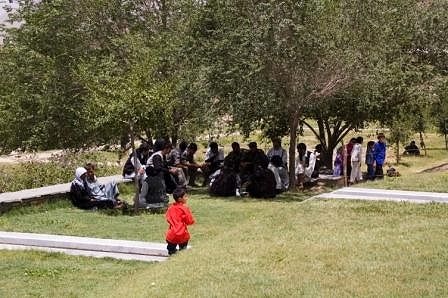
One of the first priorities of a community development project is to
gather local leaders and representatives
from the community to discuss the needs and concerns prevalent
within the society.
Meanwhile, the trainees that Lizzie already hired are busy within
the community, building relationships, interviewing families about
their individual needs, gathering quantitative demographic data, and
planning a meeting of local community leaders who need to approve
the project in order to move forward with the next step--a community
wide needs assessment forum.
As Lizzie waits for her project proposal to be approved, her
trainees wait for the community to allow them to meet together and
discuss possibilities. Lizzie also spends much of her time building
and praying for team relationships, working on communication with
team members, and meeting with the team to develop strategies for
engaging at a deeper level within the community. Sometimes it can
seem that there is little or no time left for Lizzie's own personal
development.
After a few weeks of waiting, Lizzie comes up against another
obstacle. The materials for her community development project are
available in a local language, but it is NOT the language of her
trainees or her target community. The materials need to be
translated!!
What else did we say a community development project will take?
That's right, PATIENCE!
Read Tidbits From Ebony next month to hear about the second half of
Lizzie's project! I know you'll be waiting on pins and needles.
Thanks for reading.
Love,
Elizabeth Carmichael
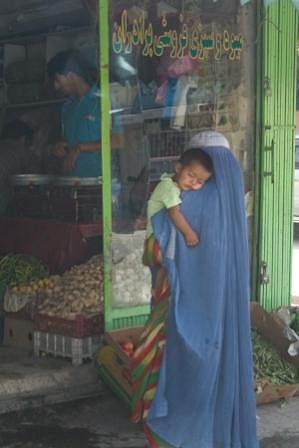
It's hard work being a kid in Ebony. It'll wear you out by the end
of the day! |