|

Herbs Beneficial During
Pregnancy
Nettle (Urtica
Dioica)
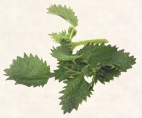
For
those who have wandered into woodlands near water, stinging nettle
will be a familiar memory. Nettle is a popular table green still
today, eaten much the same way as cooked kale or spinach. Rich in
chlorophyll, nettle is a world favorite for all urinary tract
problems.
Contains: Chlorine, chlorophyll, formic acid, iodine, magnesium,
potassium, silicon, sodium, sulfur, tannin, Vitamins A and C,
protein, iron, copper, histamine, glucoquinine, and facilitates
absorption of Vitamin D from the sun.
Nettle is a gentle yet powerful tonic to the adrenals, and is known
to rebuild the adrenal cortex, improving energy levels. It has been
used with great success in the treatment of adrenal exhaustion, one
of the primary underlying causes of Chronic Fatigue and a host of
other auto-immune disorders. As the adrenals are the fundamental
glands of immune health, Nettle is used to improve general immune
function, increasing resistance to illness caused by viruses or
bacteria. With its strong affinity to the adrenals, Nettle is used
extensively to eliminate allergy and hayfever symptoms. It has been
used throughout time to restore kidney function, eliminating edema,
cystitis, incontinence, and urinary tract infections. Improving
liver function, Nettle reduces jaundice. The high Vitamin C content
of Nettle ensures that dietary iron is properly absorbed, reducing
headaches. By improving nerve signal to the muscle, Nettle helps
increase muscle response time, reducing incidence of postpartum
hemorrhage. By improving elasticity of the skin, Nettle helps
prevent tearing of vaginal tissue. Combined with burdock root,
Nettle is extremely helpful in the treatment of eczema. Nettle is an
excellent promoter of abundant breastmilk.
Oatstraw (Avena
Sativa)
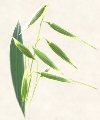
Oatstraw,
as any livestock breeder will confirm, builds the strongest possible
body, with the greatest resiliency. Used extensively in European
cultures throughout time for health and beauty, the United States
has let this valuable herb slide into disuse.
Contains: Starch, silicic acid, calcium, Vitamins A, C, B-complex,
LE, G, phosphorus, potassium, mucin, and protein.
Oatstraw contains Avenin, an amorphous alkaloid which is highly
nutritive to cells, improving normal cellular reproduction. Its
calcium is so easily absorbed that oatstraw is considered the
premier food/herb for the nervous system. Working directly on the
brain and endocrine system, oatstraw reduces nervous disability,
anxiety, and epilepsy. Due to its ease of absorption, oatstraw has
been used with great success in addiction recovery. As calcium is
responsible for the enzymatic process by which nutrients are laid
down in the muscle, oatstraw improves muscle tone throughout the
body, reducing leg cramps and heart palpations, improving digestion
and elimination. Improving muscle tone allows the cardiovascular
system to function more vigorously, improving circulation to the
uterus and placenta, and therefore, to the baby. Its high levels of
minerals make oatstraw invaluable in building excellent bone density
and enamel on teeth. Oatmeal's high levels of silicic acid are
responsible for its international fame for helping heal skin
disorders such as acne and relief from topical inflammations such as
chicken pox and poison ivy. Oatstraw, in cases of allergic
reactions, seems not to affect the individual to the same degree as
the oat grain and is often used without aggravation by those who
cannot eat oats.
Red
Raspberry (Rubus strigosus or idaeus)
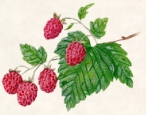
Likely
the most well-known pregnancy herb, red raspberry has been used
throughout Europe and the Americas for centuries as the premier herb
for the childbearing years. Growing easily in almost every
environmental condition, even the youngest country child can
identify the wild, briary canes as they overtake everything in their
path.
Contains: Fruit sugar, pectin, citric acid, malic acid, Vitamins C
and B2, niacin, carotene, magnesium, manganese, molybdenum,
selenium, and improves Vitamin D absorption.
Red Raspberry is a specific muscle toner, working on the smooth
muscle of the body, including the uterus. As it soothes spastic
muscle behavior, it improves contractibility of the uterus during
labor. The particular properties of the herb tone and nourish the
ovaries and, by relation to the pituitary, reduces nausea, morning
sickness, and intestinal spasm caused by excess progesterone. This
same relationship has made red raspberry a popular herb for
menstrual cramps and hot flashes. Due to its astringent qualities,
it is used for mouth ulcers, bleeding gums, hemorrhage, hemorrhoids,
and cold sores. The unique mineral blend in red raspberry promotes
healthy nails, bones, teeth, and skin.
Alfalfa (Medicago
Sativa)
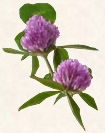
One of
the richest mineral foods in the world, alfalfa's roots grow as deep
as 130 feet into the ground, allowing it to reach minerals not
available at higher levels. The name "alfalfa" is Arabic and means
"father of all foods".
Contains: Calcium, magnesium, phosphorus, potassium, chlorophyll,
biotin, choline, inositol, iron, PABA, sodium, sulfur, tryptophan,
Vitamins A, B complex, C, E, G, K, P, and U,
Alfalfa is a restorative tonic which promotes pituitary gland
function. It contains 8 enzymes known to promote a chemical reaction
that enables food to be assimilated properly, helping to normalize
weight, reduce incidence of ulcers, diabetes, and other digestive
disorders. It alkalinizes the body, reducing arthritis symptoms,
neutralizing uric acid, improving kidney function, and reducing
edema. A toning agent to the intestines, it improves peristaltic
action of the bowels, improving colon disorders and normalizing
bowel movements. It contains anti-fungal properties. Alfalfa's
tryptophan levels help improve sleep patterns. In tablet form,
alfalfa has been used successfully to reduce heart disease and
improve arrhythmia. Alfalfa has been shown, in laboratory trials, to
reduce cholesterol levels by reducing plaque.
|