|
Healthy Living
Side-Lined Long
Enough!
Leafy Green Veggies to the Rescue!
By Mrs. Debby Sapp
Christian Childbirth Educator, Doula, Certified Lactation Counselor,
Professional Herbalist
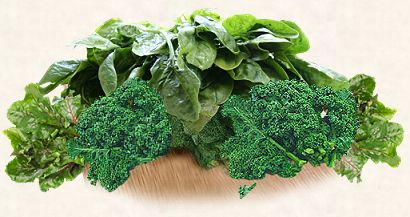
Women who are looking towards pregnancy and those in the midst of
pregnancy have a friend just waiting to get involved: dark leafy
green veggies. Spinach; kale; collards; mustard greens; turnip
greens; broccoli; Brussels sprouts; red leaf lettuce; even yard
greens such as dandelion; there are many to choose from. Don’t
confuse these with any old green vegetable, such as green beans, or
with iceberg lettuce or celery. These have leaves - one way or
another and they have to be dark. With the large variety available,
there’s likely to be at least one or two each woman likes. These
power-packed vegetables help keep the body healthy and with growing
a baby in the womb. Though many of the nutrients and benefits I’ll
discuss are also found in other foods, I want to focus on the
amazing benefits of this class of food.
Look at quality prenatal vitamins and then check the nutrients found
in dark leafy green veggies: calcium; magnesium; molybdenum; vitamin
K; Riboflavin (B2); Folate; most B vitamins except B12; vitamin A;
vitamin C. These foods are chock full of what we want to have for
our growing babies, but in a much tastier, easier-to-assimilate
package.
Variety of
nutrients/Variety of benefits:
Though most grain products are now supplemented with the artificial
form of folate, folic acid, we can get all the benefits of folate
from a great source: dark leafy green veggies. Personally, I think
natural is best. So, to me, simply choosing foods naturally high in
folate, such as leafy green veggies, is a wise choice. Folate has
been shown to prevent spinal cord birth defects, so as a woman looks
toward pregnancy, she wants to eat plenty of foods with this
nutrient. In pregnancy, our bodies use this nutrient to actually
build genetic material. If ever there was a nutrient that women in
the child-bearing years should love, it’s this one.
Vitamin A and C are known for their work in helping our immune
system and vitamin A is known for growing healthy bones and teeth.
One study even showed that women in SE Asia who had good levels of
vitamin A had lower maternal mortality rates. But, we don’t want to
get too much vitamin A because there is an amount that becomes toxic
and too much vitamin C can cause the opposite problem as
constipation. So, what’s a pregnant mom to do? Eat dark leafy green
veggies! They have both and are balanced in such a way that it’s
nigh on impossible to overdose on these vitamins from this source,
because you’ll be full way before the overdose.
Calcium and magnesium are known for helping our bones, but did you
know they also help in keeping your blood pressure normal and are
needed to help your blood clot normally? And, calcium and magnesium
work together to turn our food to energy. ENERGY! What pregnant
woman doesn’t want more energy? When thinking of calcium and leafy
green veggies, think first of broccoli or alfalfa. Alfalfa actually
has both calcium and iron in it, but they can both be assimilated
and don’t ‘fight’ each other as normally happens when eating foods
with both. Another wonderful benefit of magnesium is that it’s used
to build genetic material. Women who are low in magnesium may get
nauseous. That’s not saying all pregnancy-related nausea is due to
lack of magnesium, but we sure don’t want to encourage it, do we?
So, you know you want these nutrients. How to get them? Don’t think
first of a pill; think of your friends: dark leafy green vegetables.
They are designed with these nutrients in the right balance that’s
needed in order for your body to use them. You need twice as much
calcium as you do magnesium. Otherwise, they’re out of balance and
can’t work as well.
We all know how iron is recommended for pregnant women. But, did you
know that the iron present in the foods you eat is easier absorbed
when you eat it with a vitamin C-rich food, such as leafy green
vegetables? And, eating vegetables along with meat will help your
body get more iron out of both of these foods. It’s a synergistic
dynamo! Hopefully you already knew eating iron-rich foods with foods
high in calcium, such as dairy, can cause a competition where
neither nutrient is taken in as well as we wish. One answer is to
eat dairy foods separate, but since this article is about dark leafy
green veggies, look towards alfalfa, as I mentioned in the paragraph
above.
Energy. When we think of nutrients to give us energy, we often think
of B vitamins. Well, if it’s B vitamins you want, it’s dark leafy
green veggies you’ll be eating. Taking in any B vitamin in a
mega-dose can actually cause a deficiency in other B vitamins, so -
once again - we need a balance here. The best balance, in my
opinion, is to take them in the way we were designed to assimilate
them: in food and the foods with a great balance of B vitamins are
our friends. The darker the leafy green, the more B vitamins it has
left in it. B vitamins are destroyed by high heat, so think raw.
Vitamin K is what our bodies use to help our blood clot. This is
important because we want our blood to clot well after we give
birth. We also want our babies’ blood to clot well after birth. Dark
leafy green veggies are jammed packed with this. Although women are
often told that they can’t raise the levels of vitamin K in their
preborn babies or in their breastmilk, I wonder whether this is
really true. CNM Bernice Keutzer, in her article “Q & A about
Vitamin K” talks of a study where women who took high enough levels
of vitamin K DID raise their breastmilk levels of vitamin K to the
same level as fortified formula. And, I keep remembering that
vitamin K is a fat-soluble vitamin. So, it’s stored for the long
haul. Surely, if we ate good levels in pregnancy with optimal
amounts of fat and continued to eat well after birth, our bodies are
designed to give our babies what they need.
Molybdenum is a nutrient most of us don’t think of often. But, we
use this nutrient to store iron and to make enzymes we use for
metabolism. Sluggish metabolism? Think molybdenum and where to get
it? You know the answer, don’t you? An wonderful side benefit of
molybdenum is that it may even help our bodies fight off cancer.
Instead of Side Effects, Think Side Benefits:
In pregnancy, there may be varying complaints that can be easily
avoided with a diet high in dark leafy green veggies. Let’s look at
some of those:
Helps Resolve
Constipation
Because the growing womb may press on the lower intestine and rectum
and because many women work now, with little time to eat or drink as
they need to, this is a commonly heard complaint. Leafy green vegies
provide fiber and fluid in the diet. Even simply taking alfalfa
capsules regularly (a wonderfully easy way to up the dark leafy
green veggies!) with a glass of juice and good bowel habits, is a
great way to have this problem go away naturally.
Lowers risk of UTIs
Just keeping your vitamin A at healthy levels can help lower your
risk for this. This is important because asymptomatic UTIs are
implicated in preterm birth and other problems.
Good-bye Leg Cramps
Because of the wonderful balance of calcium and magnesium in dark
leafy green vegies, these are wonderful for combating those painful,
nasty leg cramps, especially if you’re eating salt to taste.
Crave Something
besides Ice
Craving ice may be a sign of anemia. To be on the safe side, eating
leafy green veggies with protein-rich foods may help deal with this.
Choose crunchy foods, even crunchy dark leafy greens!
I Kissed Anemia
Good-bye
Women of the world, unite to prevent this! Eat those leafy greens!
Anemia is not always caused by nutritional deficiencies, but it
often is. And, when it is, reach for your leafy green friends. If
it’s due to lack of folate or iron, either way, leafy greens have
part of what you need. If you suspect or have been told you have
anemia, up your consumption to 3-4 times a day with a protein-rich
food. Remember what you read above? The folate, C- and B-vitamins in
leafy greens help your body assimilate the iron much better without
all the problems that can occur from pills. BUT, don’t over-cook
your friends. Keep them dark green, crunchy and tasty. That’s how
you know they still have their nutrients.
Go Green to Support
Skin Changes
Our bodies were designed to change to birth our babies. We often see
a variety of changes in our skin as we and our babies grow in
pregnancy. Some are due to hormones, but in every body system,
proper nutrients are needed in order for them to function as they
should. This includes the skin. Leafy greens are a skin’s friend.
Eat them before pregnancy so the skin is healthy going into the
pregnancy and keep on eating them so it can stretch and change as
needed.
How Much?
Think at least two servings a day. Find your favorite two or three
dark leafy greens and keep them in the house all the time. You may
not like them frozen, but may find you love them raw, or vice versa.
You’ll get more nutrition out of them raw or juiced, but eat them
daily. Keep them in the highest humidity place in your refrigerator.
Don’t forget to consider alfalfa or broccoli sprouts to your list of
choices.
If you have trouble getting these in because you are so busy,
consider keeping alfalfa capsules in your purse so you can eat them
with your food on the go. Look for restaurants with dark leafy green
vegetables or salads and tell them this is important to you.
I hope I’ve encouraged you to make friends with dark leafy green
veggies. They were designed to meet your needs, pregnant momma!
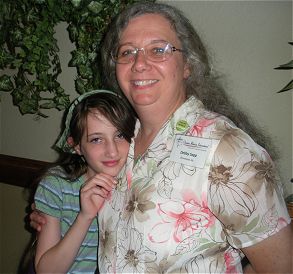
Mrs. Debby Sapp and her daughter, Glorianna
Blessed Babies and Families
|